Kent Students’ Union
The primary website for Kent Students’ Union serves as the central digital platform for the organisation, supporting a wide range of services including student advice, representation, activities, governance, and campaigns.
The site supports the whole student population at the University of Kent, and over 15,000 members of KSU, containing over 150 pages and incorporates numerous interactive systems that support student engagement throughout the academic year. I have been responsible for the design, development, and long-term evolution of the platform since 2019, gradually transforming the site from a legacy structure into a more streamlined and maintainable system.
Platform architecture
The website operates as a large, modular platform built using structured front-end templates combined with dynamic content delivered through the CMS, Students’ Union Management System (SUMS). My work focuses on designing and maintaining the front-end architecture while integrating data and functionality from external systems.
The platform includes a wide range of student-facing tools and services, including:
- a petitions system for student campaigns
- the ChangeIt! student idea platform with upvote/downvote functionality
- a spare room and housemate matching tool
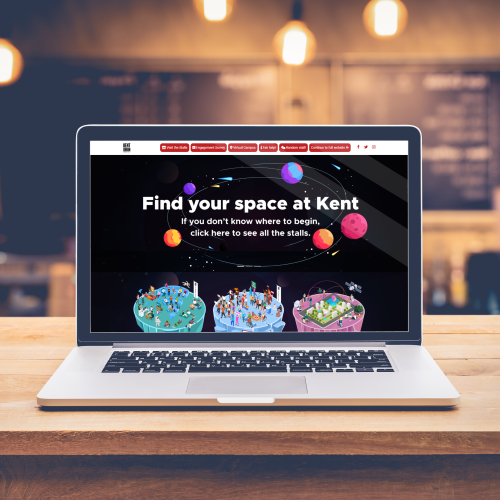
- digital stalls used during the Welcome Fair and Welcome Back Fair
- event listings and news feeds
- officer campaigns and liberation month campaigns
- governance and democratic processes
Many of these services rely on data provided through a mixture of legacy ExpressionEngine modules and an API provided by SUMS called PLUTO, which I integrate into the site using EE tags or JavaScript respectively, to dynamically populate content.
Front-end development
All front-end templates for the platform have been developed by me using HTML, CSS and Bootstrap 5.
Dynamic content is integrated through the ExpressionEngine modules provided by SUMS, which uses structured tags to embed variables and template components across the site. This enables the platform to maintain a modular structure while supporting large amounts of content.
Where functionality required additional flexibility, I have also integrated custom PHP systems hosted within internal infrastructure. These are embedded within the website through iframes so that they appear seamless to users while submitting data to internal databases. Examples include internal reporting tools and forms that integrate with internal systems and support ticket workflows.
Rebuild following organisational rebrand
In 2025, the organisation rebranded from Kent Union to Kent Students’ Union, introducing a new identity and visual system. This provided the opportunity to completely rebuild the website from the ground up. The rebuild included:
- migrating the entire platform to Bootstrap 5
- rebuilding every page template to match the new identity
- restructuring navigation and page architecture
- removing outdated and redundant content
- simplifying user journeys across the site
As part of this work I also significantly reduced the number of unnecessary pages and introduced a flatter site architecture, improving navigation and reducing complexity.
Accessibility leadership
Accessibility has been a core focus of the platform’s development since shortly after I started. Originally working with the University of Kent’s Project OPERA accessibility initiative in 2020, I led work to ensure the KSU website meets Web Content Accessibility Guidelines (WCAG) 2.x AA standards, which are required for publicly funded organisations.
Since then, no webpage or major change has been published without accessibility checks and fixing any issues that arise. Accessibility work has included:
- designing templates with accessible semantic structure
- improving colour contrast and typography
- ensuring keyboard navigation compatibility
- improving alternative text and metadata across media
- auditing large sections of the website annually
To ensure transparency and accountability, I created a system that publishes an accessibility score directly in the footer of every page, including the most recent test timestamp. I also developed a back-end auditing tool that records test results and produces an overview dashboard for keeping track of what was tested and when.
Since 2021, in May each year I have led the organisation in celebrating Global Accessibility Awareness Day. As part of this I conduct a full accessibility audit each year, and publish the results in a comprehensive news article on the website. The most recent audit covered 135 pages, achieving an average Lighthouse accessibility score of 99.41% on mobile and 99.71% on desktop.
Content governance and collaboration
The website is developed centrally but supports content contributions from multiple departments within the organisation.
In most cases, teams provide written content which I then transform into fully structured pages within the site, often including sourcing and preparing suitable media. This involves balancing multiple stakeholder requirements while maintaining consistency, usability, and accessibility.
In specific cases where departments require more direct editing capability, such as content on the regularly updated Advice webpages, I have implemented templating solutions that allow content to be managed through WYSIWYG interfaces while still maintaining the overall site structure and branding.
Impact
The website typically receives around 900,000 to 1,000,000 page views per year, with usage patterns strongly influenced by the academic calendar. Major traffic peaks occur during student arrivals and Welcome Week, elections voting, and for large campaigns and events.
Through improvements to site structure and navigation, I have been able to reduce unnecessary pages while improving overall usability and discoverability of content. The rebrand was taken as an opportunity to change and modernise much of the unseen inner workings too.